
Moving out is stressful enough without worrying about bond deductions. If you want your full bond back in Sydney, the key is simple: return the property in the right condition, understand what property managers check, and clean the areas that usually trigger disputes.
That sounds easy, but in practice, tenants often lose money over small details such as a dirty oven, stained carpet, bathroom mould, window tracks, or missed skirting boards. The good news is that most of those issues are preventable with the right end-of-lease cleaning approach and a proper final inspection checklist.
This guide explains exactly how the rental bond process works, what NSW tenants should know, what real estate agents look for, and how to prepare your property so it is inspection-ready. It also shows when professional bond cleaning in Sydney makes the difference between a partial refund and a smooth bond release.
What “Getting Your Full Bond Back” Really Means
Your rental bond is the security deposit held during your tenancy. At the end of the lease, that bond is returned if the property is handed back in the expected condition, minus any approved deductions for damage, missing items, or cleaning beyond ordinary use.
In simple terms, getting your full bond back means:
- The property matches the original condition report as closely as possible,
- Normal wear and tear is not confused with tenant damage,
- and the home is cleaned to a standard your property manager can accept.
A full bond return is not about making the property look brand new. It is about returning it in a reasonably clean, well-maintained state that aligns with your lease agreement and the NSW tenancy rules.
How the Bond Refund Process Works in NSW
In New South Wales, the bond refund process usually depends on how clean the property is, whether there is any damage, and whether both parties agree on the final condition. The original tenancy agreement and entry condition report matter a lot here, because they provide the comparison point for the final inspection.
The basic process works like this:
- You move out and complete your end-of-lease cleaning.
- The property manager or landlord inspects the property.
- They compare the result with the entry condition report.
- If everything is satisfactory, the bond is released.
- If there are issues, deductions may be claimed for cleaning, repairs, or replacement.
What the tenancy agreement usually requires
Many tenancy agreements include expectations around:
- general cleanliness,
- carpet condition,
- oven and kitchen cleaning,
- bathroom sanitation,
- and removal of all personal items and rubbish.
Some agreements also mention professional carpet steam cleaning or specialist services if pets are present. That is why it is important to check your lease before moving out.
Fair wear and tear vs tenant damage
This is one of the most misunderstood parts of bond disputes.
Fair wear and tear means normal deterioration from everyday use.
Tenant damage means avoidable harm, neglect, or misuse.
A faded carpet from years of living is usually fair wear and tear. A deep stain from a spill that was never cleaned may be treated as tenant damage. A scuffed wall from normal furniture placement is different from a large hole in the plaster.
Understanding that difference helps you focus on the areas that are actually under your control.
What Property Managers Check During the Final Inspection
Property managers in Sydney usually do not expect perfection, but they do expect the home to be returned in a clean and orderly condition. During the final inspection, they will often look at the same areas that commonly appear on end-of-lease cleaning checklists.
They usually check:
- kitchen condition,
- bathroom hygiene,
- carpet and floor condition,
- walls, doors, and skirting boards,
- windows and tracks,
- balconies or outdoor areas,
- rubbish removal,
- and any visible damage.
The property manager is comparing the current condition against the entry condition report. That is why photos, cleaning receipts, and a clear handover process can help protect your position if there is a disagreement.
The areas that usually trigger deductions
The biggest bond deductions often come from:
- a greasy oven,
- stained carpets,
- dirty bathrooms,
- mould in wet areas,
- wall marks,
- dust build-up,
- and leftover rubbish.
These are the areas that need the most attention because they are easy for an inspector to spot and difficult to argue away later.
How the entry condition report is used
The condition report is one of the strongest documents in the bond refund process. It shows the property’s original condition at the start of the tenancy. If you are disputing a claim, this document becomes important evidence.
That is why it helps to keep your own:
- move-in photos,
- move-out photos,
- cleaning invoices,
- and any written communication with the property manager.
The End of Lease Cleaning Checklist That Helps Protect Your Bond
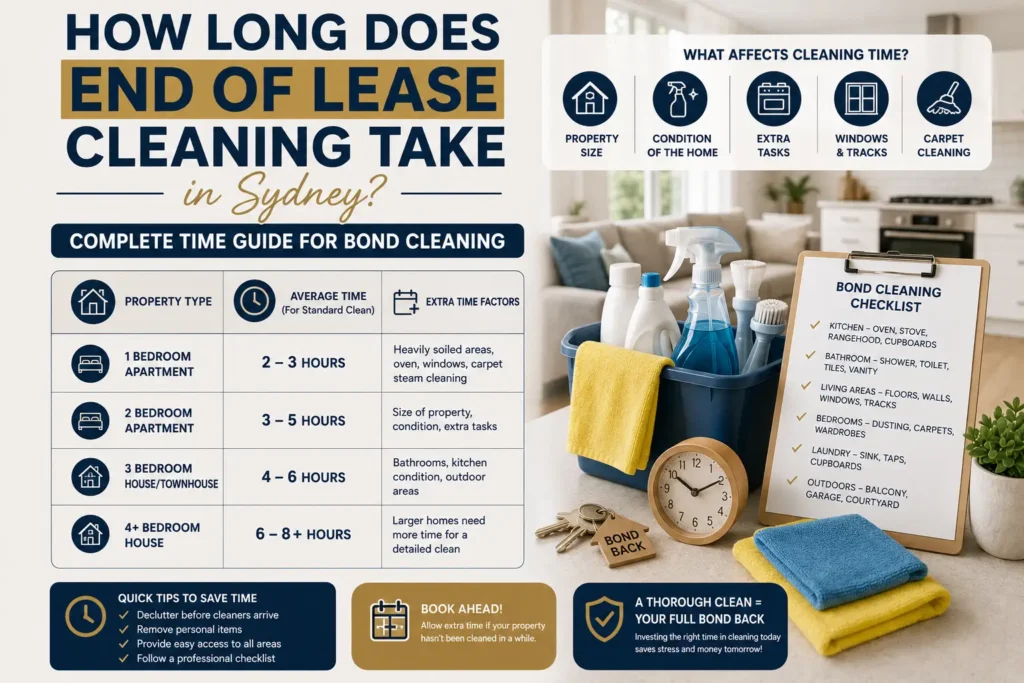
If you want your full bond back in Sydney, cleaning is where most of the work happens. End-of-lease cleaning is more detailed than normal household cleaning because it focuses on the areas inspectors care about most.
A proper move-out clean should cover every room, every surface, and every problem area that could lead to deductions.
Kitchen cleaning priorities
The kitchen is one of the most common sources of bond issues because grease and food residue are easy to notice.
Focus on:
- oven cleaning and degreasing,
- stovetop and rangehood cleaning,
- splashback wiping,
- cupboard interiors and exteriors,
- sink and tap cleaning,
- benchtops,
- appliance fronts,
- and removing crumbs, grease, and stains.
If the oven is left dirty, property managers often see that as a sign the whole clean was incomplete. It is one of the fastest ways to lose trust during the final inspection.
Bathroom cleaning priorities
Bathrooms need more than a quick wipe. They should be sanitised and free from visible grime.
Pay attention to:
- shower screens,
- grout,
- tiles,
- toilet,
- sink,
- mirrors,
- taps,
- soap scum,
- mould,
- and limescale.
Bathroom mould removal is especially important in Sydney rentals because moisture build-up can become a serious inspection issue if left untreated.
Carpet and flooring cleaning
Floors matter because they cover a large visual area. A room may look tidy at first glance, but stains, odours, and dust show quickly under inspection.
Clean:
- carpets,
- hardwood or laminate floors,
- tile floors,
- corners,
- edges,
- and under furniture.
If carpets have stains or pet odours, steam carpet cleaning is often the safer option. It can also help show that you took reasonable steps to return the property in clean condition.
Walls, skirting boards, windows, and tracks
These are the details many tenants forget. They are small, but they are also very visible.
Check:
- wall marks,
- fingerprints,
- cobwebs,
- skirting board dust,
- window glass,
- window tracks,
- door handles,
- and light switches.
A property can be clean enough for daily living and still fail a final inspection because these overlooked areas were missed.
Outdoor and balcony areas
If your rental includes a balcony, courtyard, garage, or small outdoor area, it needs attention too.
Don’t forget to:
- sweep the balcony,
- remove leaves,
- clear rubbish,
- wipe surfaces,
- and clean drains or corners where dirt collects.
Sydney inspectors often check these areas because they are easy to overlook and simple to document.
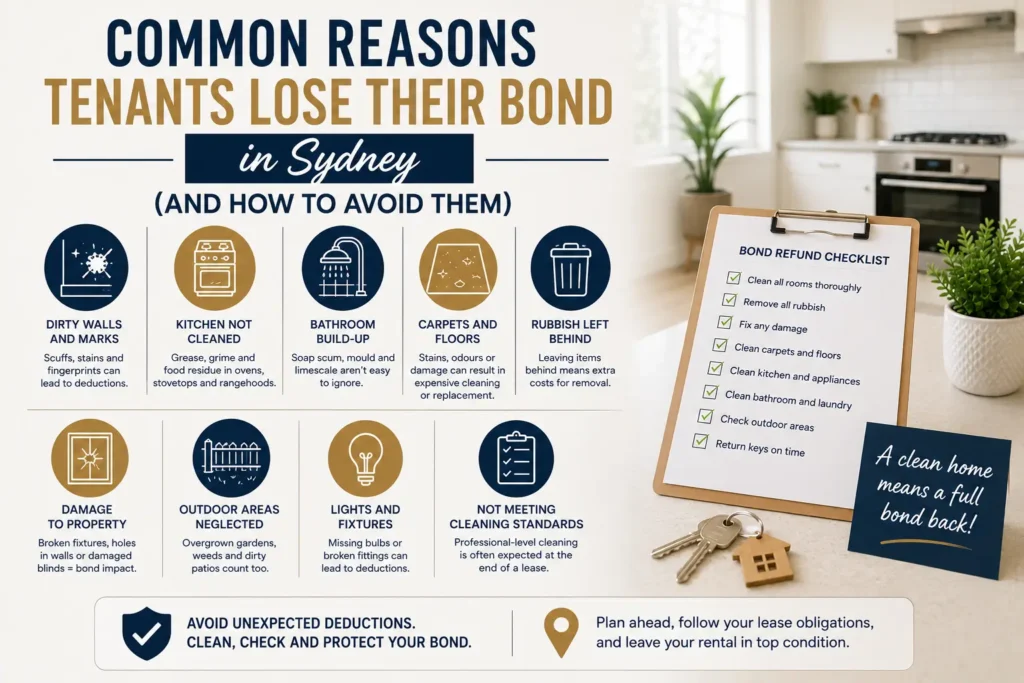
Common Reasons Tenants Lose Bond Money
Most bond deductions are avoidable. They usually fall into two categories: cleaning-related deductions and damage-related deductions.
Cleaning-related deductions
These are the most common and usually the easiest to prevent.
Examples include:
- dirty oven and rangehood,
- bathroom grime,
- stains on carpet,
- dust on surfaces,
- mould in wet areas,
- grease on kitchen fixtures,
- and rubbish left behind.
Damage-related deductions
These are more serious and may require repair rather than cleaning.
Examples include:
- holes in walls,
- broken blinds,
- cracked tiles,
- damaged fittings,
- missing keys,
- and broken appliance parts.
The best way to avoid these issues is to deal with small repairs early and not leave them until the last day.
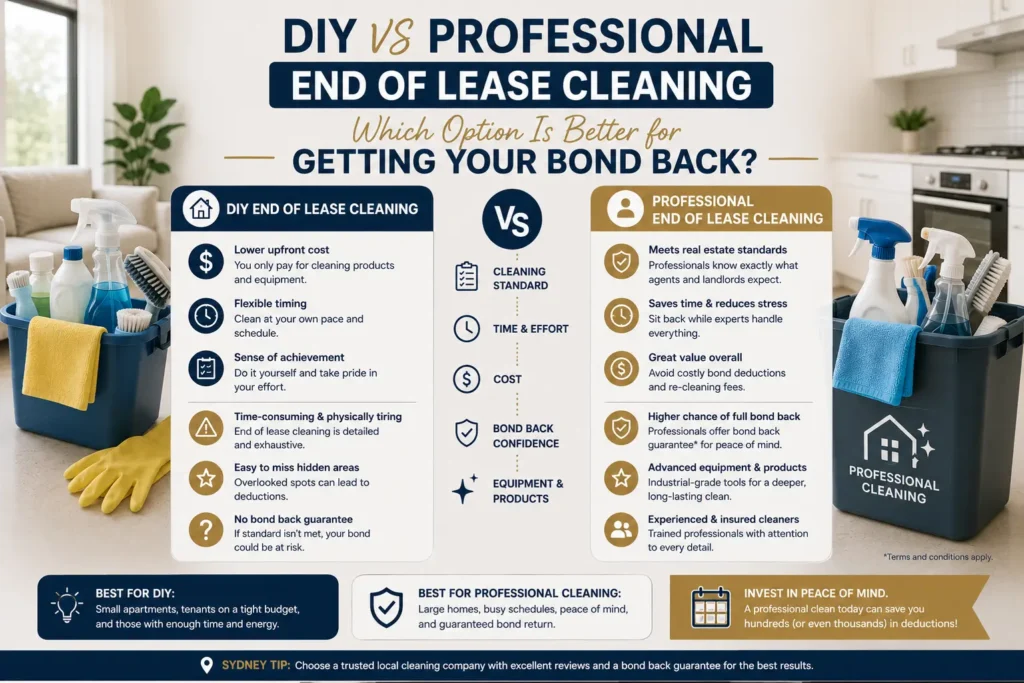
DIY Cleaning vs Hiring Professional Bond Cleaners in Sydney
Some tenants can manage a good DIY clean, especially in a small, lightly used property. But many move-outs are more complicated than they first appear.
When DIY cleaning can work
DIY cleaning may be enough when:
- The property is small,
- There are no stains or odours,
- pets were not involved,
- And you have enough time to clean properly.
It can save money, but only if you can reach the inspection standard the property manager expects.
When professional cleaning is the safer option
Professional bond cleaners in Sydney make sense when:
- The property has heavy use,
- There are carpet stains,
- The oven is badly built up,
- There is mould or grease,
- You are short on time,
- Or you want a cleaner result before handover.
This is where a service like Hifi Cleaning can help. With 3+ years of experience in end-of-lease cleaning in Sydney, the team understands what landlords and property managers usually check. The business also offers a 100% Bond Back Guarantee, which gives tenants added confidence when they want to reduce the risk of deductions.
If you are moving out soon, professional help can save you time, reduce stress, and improve your chances of a smooth final inspection.
How to Prepare for the Final Inspection
A good clean is important, but preparation matters too. The final inspection is easier when the property is empty, organised, and easy to walk through.
48 hours before moving out
Use this checklist:
- Remove all personal items and rubbish.
- Clean the kitchen, bathroom, and floors.
- Wipe walls, switches, and high-touch surfaces.
- Check for stains, marks, or missed areas.
- Take clear photos of each room.
- Keep your cleaning receipts and invoices.
On inspection day
Before the property manager arrives:
- open curtains or blinds to improve visibility,
- make sure all rooms are accessible,
- leave keys where requested,
- and do a final walkthrough for dust, marks, or odours.
A tidy presentation helps create a better first impression, which matters more than many tenants realise.
What to Do If Your Bond Is Delayed or Disputed
Sometimes a tenant does everything right and still receives a cleaning claim. If that happens, do not respond emotionally. Respond with evidence.
How to respond to a cleaning claim
Start by asking for:
- itemised reasons for the deduction,
- photos of the concern,
- and a comparison with the condition report.
Then provide:
- Your move-out photos,
- Your cleaning invoice,
- and any messages that show the property was handed over properly.
When to escalate the issue
If the disagreement cannot be resolved directly, the next step is to follow the NSW dispute process through the appropriate tenancy channels. Keeping calm, organised records gives you the strongest position.
Sydney-Specific Tips to Improve Your Chances of a Full Bond Refund
Sydney rentals move fast, and property managers often expect a strong presentation at handover. That means tenants need to be especially careful about the details.
Apartment move-outs in Sydney
Sydney apartments often have:
- compact kitchens,
- limited storage,
- balcony dust,
- lift access restrictions,
- and shared building rules.
Because of that, small marks or missed cleaning areas stand out quickly.
House and family rental move-outs
Houses usually involve:
- more floor space,
- more windows,
- outdoor areas,
- garages,
- and extra dust or wear.
The larger the property, the easier it is to miss something. That is why a room-by-room plan is always better than a quick last-minute clean.
If you are searching for bond cleaning Sydney, end of lease cleaning Sydney, or move out cleaning Sydney, local service matters. A Sydney-based cleaner understands the type of inspection standards that are common across local rentals, from apartments in the Inner West to family homes in the western suburbs.
When a Bond Cleaning Service Makes the Most Sense
A professional service is usually the right move when you need a cleaner result without the pressure of doing everything yourself.
You should seriously consider booking a bond cleaner if:
- The property has heavy grease or grime,
- carpets need steam cleaning,
- The bathroom has mould or soap scum,
- The property manager is strict,
- Your move-out deadline is close.
Hifi Cleaning works across Sydney and offers end-of-lease cleaning designed for tenants who want a cleaner handover and a smoother inspection. The business is based at 13 Kelso Pl, St Andrews NSW 2566, and can be reached on 0486 145 774. You can also visit hificleaning.com.au to learn more.
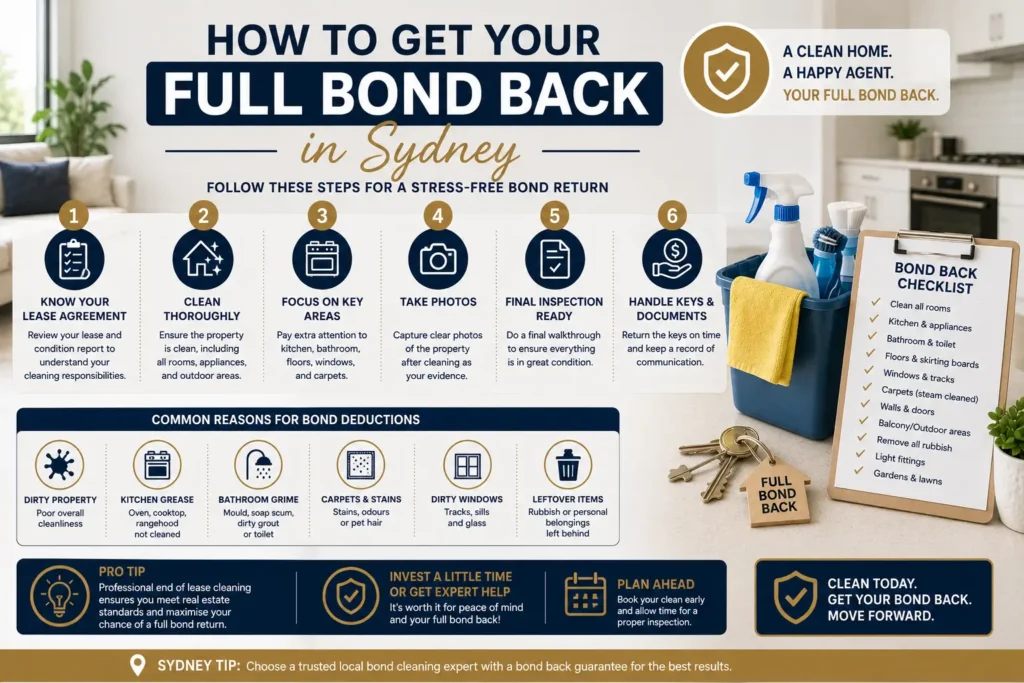
Quick Checklist for Getting Your Full Bond Back
Here is the shortest version of the process:
- Read your tenancy agreement
- Compare the home against the condition report
- Deep clean the kitchen and bathroom
- Steam clean carpets if needed
- Remove rubbish and personal items
- Wipe walls, windows, and skirting boards
- Fix small damage early
- Take photos before handover
- Keep all receipts and invoices
- Be ready for the final inspection
FAQ: How to Get Your Full Bond Back in Sydney
How do I get my full bond back in Sydney?
Return the property clean, remove all belongings, fix minor issues, and make sure it matches the condition expected under your tenancy agreement.
What do property managers check during a final inspection?
They usually check cleanliness, damage, odours, carpets, kitchen condition, bathroom condition, windows, and any areas listed in the condition report.
Is professional end-of-lease cleaning worth it?
Yes, especially if the property is large, dirty, pet-friendly, or short on time. It can reduce the risk of avoidable deductions.
What is fair wear and tear in NSW?
Fair wear and tear is normal deterioration from everyday use. It is different from damage, neglect, or poor cleaning.
Do I need carpet steam cleaning to get my bond back?
Not always, but it is often helpful if carpets are stained, heavily used, or affected by pets. Some leases also expect it.
Can a landlord charge for cleaning in NSW?
They may claim cleaning costs if the property is not returned in an acceptable condition or if the tenant caused excessive mess or damage.
How long does a bond refund take in NSW?
It depends on whether both parties agree and how quickly the claim is processed. Disputes can delay the release.
What are the biggest reasons tenants lose bond money?
Dirty ovens, bathroom grime, carpet stains, wall marks, rubbish left behind, and damage are the most common reasons.
Should I clean before or after moving furniture out?
After. An empty property is easier to clean thoroughly and inspect properly.
What should I do if the property manager says the cleaning is not good enough?
Ask for specific reasons, compare them to the condition report, and provide photos or receipts to support your case.
Is bond cleaning mandatory in Sydney?
It is not always a strict legal requirement, but many leases and inspection standards make it effectively necessary.
Do I need to clean windows and tracks?
Yes. These are commonly checked and are often missed during rushed move-out cleans.
Can I dispute unfair bond deductions?
Yes. Keep records, photos, and receipts, then follow the NSW dispute process if needed.
What is the best way to prepare for the final inspection?
Use a checklist, clean every room properly, remove rubbish, fix minor issues, and document the property with photos.
Should I hire a bond cleaner in Sydney?
If the cleaning is large, detailed, or time-sensitive, hiring a professional cleaner is usually the safer choice.
Conclusion
Getting your full bond back in Sydney is not about luck. It is about preparation, cleaning the right areas, understanding what property managers look for, and keeping evidence in case of a dispute.
The most reliable approach is to follow a detailed end-of-lease cleaning checklist, treat the final inspection seriously, and deal with problem areas early. That includes the kitchen, bathroom, carpets, windows, walls, and outdoor spaces. If the job feels too big or the deadline is tight, professional bond cleaning can make the process much easier.
At Hifi Cleaning, the focus is on helping Sydney tenants hand back their property in inspection-ready condition with a 100% Bond Back Guarantee. With local experience, practical service, and a clear understanding of end-of-lease requirements, the team is set up to help make your move-out smoother.
Need help getting your bond back in Sydney?
Hifi Cleaning provides professional end-of-lease cleaning in Sydney with a 100% Bond Back Guarantee. If you want a cleaner handover, less stress, and a better chance of passing your final inspection, get in touch today.
Call: 0486 145 774
Website: hificleaning.com.au
Address: 13 Kelso Pl, St Andrews NSW 2566