Moving out of a rental property sounds simple until the final inspection arrives.
Many tenants lose part of their bond because they misunderstand their cleaning responsibilities. Others assume “reasonably clean” means a quick vacuum and wiping the kitchen bench. Landlords and property managers often expect far more, especially during end-of-tenancy inspections.
Understanding tenant cleaning responsibilities is important for three reasons:
- protecting your security deposit or bond,
- avoiding disputes with landlords,
- and leaving the property in acceptable condition under the tenancy agreement.
Whether you are preparing to vacate an apartment in Sydney, moving out of a family home, or handling an end-of-lease cleaning checklist for the first time, this guide explains exactly what tenants are responsible for cleaning, what counts as fair wear and tear, and when hiring professional cleaners may be the smarter option.
What Are Tenant Cleaning Responsibilities?
Tenant cleaning responsibilities refer to the obligation to keep a rental property reasonably clean during the tenancy and return it in a similar condition when moving out, excluding fair wear and tear.
In most lease agreements, tenants are expected to:
- maintain hygiene,
- prevent avoidable damage,
- dispose of rubbish properly,
- and complete basic cleaning tasks throughout their tenancy.
This applies to:
- apartments,
- houses,
- units,
- and furnished rentals.
A landlord or property manager typically compares the condition of the property at move-out against the original condition report completed at the beginning of the tenancy.
Why Cleaning Responsibilities Matter in a Rental Property
Cleaning is directly connected to:
- bond refunds,
- inspection outcomes,
- tenancy disputes,
- and property maintenance standards.
If a property is left dirty, landlords may legally deduct cleaning costs from the tenant’s bond. Common examples include:
- grease-covered ovens,
- mouldy bathrooms,
- stained carpets,
- and excessive rubbish left behind.
For tenants in Sydney, professional property managers often follow strict inspection checklists during end-of-lease inspections. Missing even small details like dusty blinds or dirty skirting boards can create issues during the final walkthrough.
Difference Between Cleaning, Maintenance, and Damage
Many rental disputes happen because tenants confuse cleaning problems with maintenance or damage.
Cleaning
Cleaning involves removing dirt, grease, dust, mould, stains, and debris caused during normal occupancy.
Examples:
- vacuuming carpets,
- cleaning bathrooms,
- wiping appliances,
- mopping floors.
Maintenance
Maintenance usually falls under landlord responsibilities unless the tenant caused the issue.
Examples:
- plumbing repairs,
- structural issues,
- electrical faults,
- leaking roofs.
Damage
Damage occurs when neglect or misuse causes deterioration beyond normal wear and tear.
Examples:
- burns in carpet,
- broken tiles,
- large wall holes,
- pet damage.
What Tenants Are Expected to Clean During a Tenancy
Tenant cleaning obligations do not only apply at move-out. Rental properties should remain hygienic and reasonably maintained throughout the tenancy.
Kitchen Cleaning Responsibilities
The kitchen is one of the most inspected areas in any rental property.
Tenants are generally expected to clean:
- stovetops,
- range hoods,
- ovens,
- sinks,
- splashbacks,
- cupboards,
- and kitchen appliances.
Grease buildup is one of the most common reasons for cleaning deductions. Property managers often inspect:
- oven trays,
- exhaust filters,
- microwave interiors,
- and cabinet surfaces.
Important Kitchen Cleaning Tasks
- Remove food residue from appliances
- Degrease oven interiors
- Wipe cupboard doors and handles
- Clean sink stains and drains
- Remove expired food from storage areas
Bathroom Cleaning Responsibilities
Bathrooms require ongoing sanitization because moisture buildup can quickly lead to mould, soap scum, and grime.
Tenants are usually responsible for:
- cleaning toilets,
- shower screens,
- grout,
- mirrors,
- exhaust fans,
- and sinks.
Mould Prevention
Mould is a major source of tenancy disputes.
If mould develops because of poor ventilation or lack of cleaning, tenants may be held responsible. However, structural moisture problems are usually landlord responsibilities.
Good habits include:
- using exhaust fans,
- opening windows,
- wiping condensation,
- and regularly cleaning tiled surfaces.
Floor, Carpet, and Window Cleaning
Floor cleanliness significantly affects inspection results.
Tenants are generally expected to:
- vacuum carpets,
- mop hard floors,
- remove stains where possible,
- and clean windows internally.
In some tenancy agreements, carpet steam cleaning may be required if pets lived in the property.
Commonly Missed Areas
- window tracks,
- skirting boards,
- behind furniture,
- under appliances,
- and corners with dust buildup.
Outdoor Areas and Garbage Responsibilities
If the property includes:
- balconies,
- courtyards,
- garages,
- or gardens,
tenants may also need to maintain those spaces.
Typical outdoor responsibilities include:
- mowing lawns,
- removing rubbish,
- cleaning outdoor surfaces,
- and disposing of waste correctly.
Leaving garbage behind is one of the fastest ways to lose part of a bond.
End-of-Tenancy Cleaning Responsibilities Explained
End-of-tenancy cleaning is far more detailed than routine household cleaning.
Property managers inspect the property closely because the next tenant expects a clean and hygienic environment.
What Landlords Expect Before a Final Inspection
Most landlords expect the property to be returned in a condition similar to the original entry report.
This usually includes:
- cleaned appliances,
- sanitized bathrooms,
- dust-free surfaces,
- stain-free flooring where possible,
- and empty bins.
Many inspections focus heavily on:
- kitchens,
- bathrooms,
- carpets,
- and overlooked detail areas.
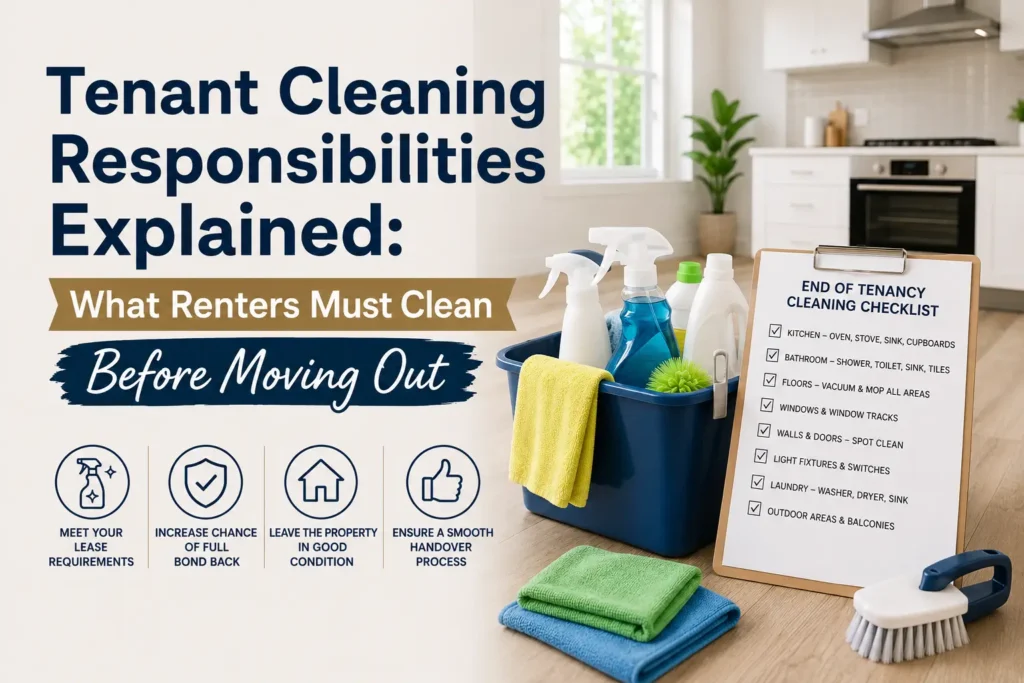
Room-by-Room Move-Out Cleaning Checklist
Kitchen
- Deep clean oven and stovetop
- Degrease range hood
- Clean cupboards inside and outside
- Wipe splashbacks
- Remove food and rubbish
Bathroom
- Remove soap scum
- Clean grout and tiles
- Sanitize toilet and sink
- Polish mirrors and taps
- Remove mould buildup
Bedrooms & Living Areas
- Vacuum carpets
- Dust blinds and skirting boards
- Wipe walls lightly
- Remove cobwebs
Laundry
- Clean sink and taps
- Remove lint buildup
- Mop floors
Common Areas Tenants Forget to Clean
Professional inspectors frequently notice:
- ceiling fans,
- exhaust vents,
- light switches,
- door frames,
- and window tracks.
These overlooked details often separate a passed inspection from a failed one.
Should Tenants Hire Professional Cleaners?
Not always. But professional end-of-lease cleaning can reduce stress and improve inspection outcomes.
This becomes especially useful when:
- the property is heavily used,
- carpets are stained,
- the tenancy lasted several years,
- or time is limited.
For Sydney renters, companies like Hifi Cleaning provide professional end-of-lease cleaning with a 100% Bond Back Guarantee.
With more than 3 years of experience servicing Sydney properties, Hifi Cleaning helps tenants prepare properties for final inspections with detailed bond cleaning services.
Fair Wear and Tear vs Tenant Damage
Understanding fair wear and tear is essential because tenants are not responsible for normal aging of the property.
What Counts as Fair Wear and Tear?
Fair wear and tear refers to natural deterioration caused by ordinary use over time.
Examples include:
- faded paint,
- worn carpet in high-traffic areas,
- loose door handles,
- and minor scuff marks.
These issues usually cannot be deducted from a tenant’s bond.
What Tenants Can Be Charged For
Landlords may charge tenants for:
- excessive dirt,
- broken fixtures,
- burn marks,
- permanent stains,
- or avoidable neglect.
Examples of Tenant Damage
Fair Wear and Tear | Tenant Damage |
Faded curtains | Torn curtains |
Minor carpet wear | Burnt carpet |
Loose hinges | Broken doors |
Small wall marks | Large wall holes |
Can Landlords Deduct Cleaning Costs From a Deposit?
Yes — but only under certain circumstances.
If the property is not returned in reasonably clean condition, landlords may deduct cleaning expenses from the bond or security deposit.
When Cleaning Charges Are Legal
Cleaning deductions are generally allowed when:
- excessive grime exists,
- rubbish is left behind,
- appliances are dirty,
- or lease cleaning obligations were ignored.
Landlords often need:
- inspection evidence,
- photographs,
- and invoices.
How Tenants Can Protect Their Deposit
1. Use the Original Condition Report
Compare the property against the move-in report.
2. Take Photos Before Vacating
Photographic evidence helps prevent disputes.
3. Keep Cleaning Receipts
Professional cleaning invoices may support your claim.
4. Follow a Detailed Cleaning Checklist
Do not rely on memory during move-out cleaning.
Common Cleaning Disputes Between Landlords and Tenants
Frequent disputes involve:
- carpet steam cleaning,
- mould responsibility,
- greasy ovens,
- wall marks,
- and pet-related odors.
Clear communication and documentation reduce problems significantly.
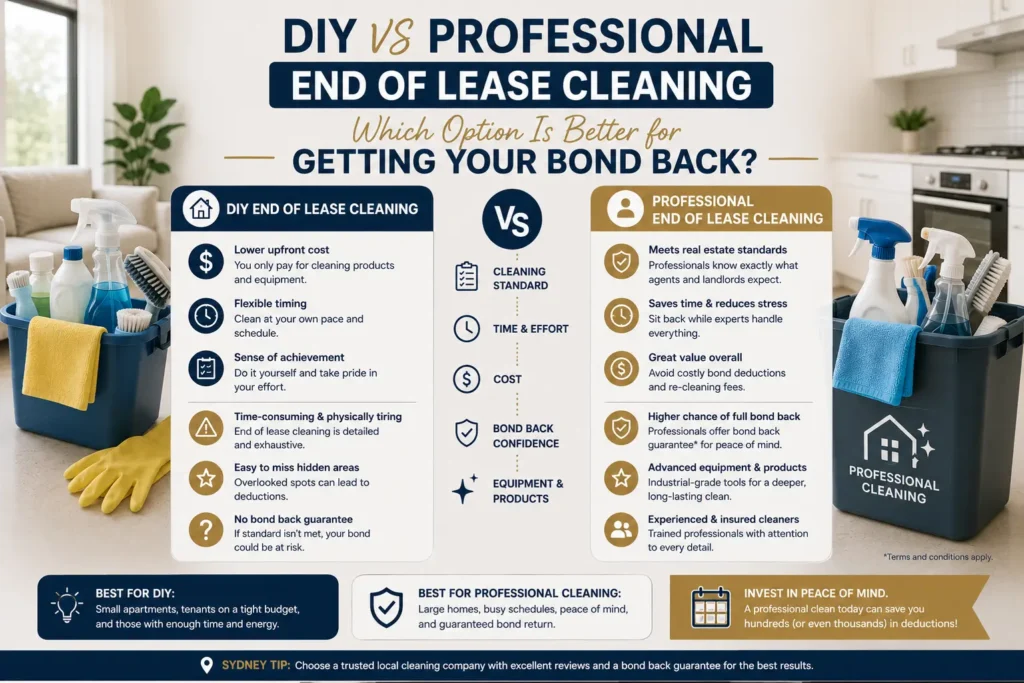
Professional End-of-Lease Cleaning vs DIY Cleaning
Some tenants prefer to clean themselves. Others hire professionals to improve inspection outcomes.
When DIY Cleaning Is Enough
DIY cleaning may work if:
- the property is already well maintained,
- the tenancy was short,
- and no major stains or damage exist.
However, deep cleaning a rental property properly takes time and attention to detail.
Benefits of Hiring Professional Cleaners
Professional bond cleaning services often include:
- detailed cleaning checklists,
- commercial-grade equipment,
- carpet steam cleaning,
- and inspection-focused cleaning.
Benefits include:
- time savings,
- reduced stress,
- and better inspection readiness.
For tenants across Sydney suburbs, Hifi Cleaning offers:
- end-of-lease cleaning,
- bond cleaning,
- and move-out cleaning services backed by a 100% Bond Back Guarantee.
Their team services properties throughout Sydney from their location at:
13 Kelso Pl, St Andrews NSW 2566.
Tenants can also contact the company directly on:
0486 145 774.
How to Choose a Reliable Cleaning Company
Look for:
- bond-back guarantees,
- positive reviews,
- insured cleaners,
- transparent pricing,
- and experience with real estate inspections.
Avoid companies that offer unrealistically cheap prices without guarantees.
Tenant Cleaning Responsibilities in Australia
Australian tenancy laws vary slightly by state, but the general expectation remains consistent:
tenants must leave the property reasonably clean.
NSW Fair Wear and Tear Rules
In New South Wales, fair wear and tear cannot usually be charged to tenants.
Examples include:
- worn flooring from normal use,
- faded paint,
- and aging fixtures.
However, avoidable dirt and damage may still result in deductions.
Bond Cleaning Expectations in Sydney
Sydney rental inspections are often strict, especially in competitive rental markets.
Property managers commonly expect:
- professionally cleaned bathrooms,
- grease-free kitchens,
- spotless appliances,
- and detailed carpet cleaning.
This is one reason many tenants choose professional end-of-lease cleaning before handing over keys.
State-Based Differences Tenants Should Know
Some states have specific rules regarding:
- carpet steam cleaning,
- pest control,
- and professional cleaning requirements.
Always review:
- your lease agreement,
- local tenancy laws,
- and agency inspection standards.
Tenant Cleaning Checklist Before Moving Out
Printable Room-by-Room Checklist
Kitchen
- Clean oven
- Wipe cupboards
- Degrease stovetop
- Empty bins
Bathroom
- Remove mould
- Sanitize toilet
- Clean mirrors
- Scrub grout
Bedrooms
- Vacuum carpets
- Dust surfaces
- Remove marks
Living Areas
- Mop floors
- Clean windows
- Remove cobwebs
Laundry
- Clean sink
- Remove lint
- Mop flooring
Outdoor Areas
- Remove rubbish
- Sweep balconies
- Tidy gardens
Last-Minute Cleaning Tips Before Inspection
Before handing over keys:
- open windows for ventilation,
- remove odors,
- empty bins,
- check hidden dust areas,
- and complete a final walkthrough.
A second inspection of your own can help identify missed areas.
Frequently Asked Questions About Tenant Cleaning Responsibilities
Can landlords force professional cleaning?
Usually no, unless stated in the lease agreement or required because of excessive dirt or damage.
Are tenants responsible for carpet cleaning?
Tenants may need carpet cleaning if carpets are heavily stained or pets caused odors.
What happens if a tenant leaves a property dirty?
The landlord may deduct professional cleaning costs from the security deposit or bond.
Is mould considered tenant damage?
It depends on the cause. Poor ventilation may become a tenant issue, while structural moisture problems are generally landlord responsibilities.
Can a landlord charge for repainting walls?
Only if damage exceeds fair wear and tear.
What is considered “reasonably clean”?
A property should be hygienic, tidy, and returned in similar condition to move-in standards.
Should tenants steam clean carpets?
Steam cleaning is often recommended for stained carpets or pet-related tenancy agreements.
Can landlords deduct normal wear and tear?
No. Normal aging and ordinary use are generally not chargeable.
How can tenants avoid bond disputes?
Use condition reports, take photos, clean thoroughly, and communicate clearly with the property manager.
What should tenants photograph before moving out?
Take photos of:
- appliances,
- bathrooms,
- flooring,
- walls,
- and every cleaned room.
Conclusion
Tenant cleaning responsibilities go far beyond basic tidying.
Understanding what landlords expect, what qualifies as fair wear and tear, and how inspections work can help tenants avoid unnecessary disputes and protect their bond.
The most successful move-outs usually involve:
- early preparation,
- detailed cleaning,
- clear documentation,
- and inspection-focused attention to detail.
For many renters, especially in Sydney’s competitive rental market, professional end-of-lease cleaning can simplify the process and reduce stress before inspection day.
Need Professional End-of-Lease Cleaning in Sydney?
If you want to maximize your chances of getting your full bond back, professional help can make a major difference.
Hifi Cleaning provides detailed end-of-lease cleaning services across Sydney with:
- 100% Bond Back Guarantee
- Experienced inspection-focused cleaners
- Professional deep cleaning
- Flexible booking options
Contact Hifi Cleaning
- Phone: 0486 145 774
- Address: 13 Kelso Pl, St Andrews NSW 2566
Book your end-of-lease cleaning today and leave your rental inspection-ready.